Insight; Why Good Rural Projects Take Time
One of the questions we are asked most often is why rural projects take so long. The answer is surprisingly simple. Because understanding a place takes time.
Good rural architecture is rarely the result of a single idea or instant inspiration. More often, it emerges through observation, collaboration, testing and a willingness to adapt when the landscape reveals something unexpected. Fearne Hill on the Isle of Wight is a good example.
The project, currently being considered in planning under Policy HO11 (formerly Paragraph 84e) is a home within an extraordinary landscape looking towards Culver Down. Like all such projects, success depends on demonstrating that the architecture responds thoughtfully and exceptionally to its setting.
When we first began studying the site, there were multiple possible locations for the building. One area repeatedly drew our attention. It occupied a subtle plateau within a wider slope and felt somehow settled within the landscape. At first, we could not fully explain why. Only later did historic mapping reveal the answer.


Research showed that buildings had once occupied this exact location. The structures themselves had disappeared, but traces remained embedded in the landscape. What initially appeared to be an unusual plateau suddenly made sense.
The building had gone. The landscape remembered.
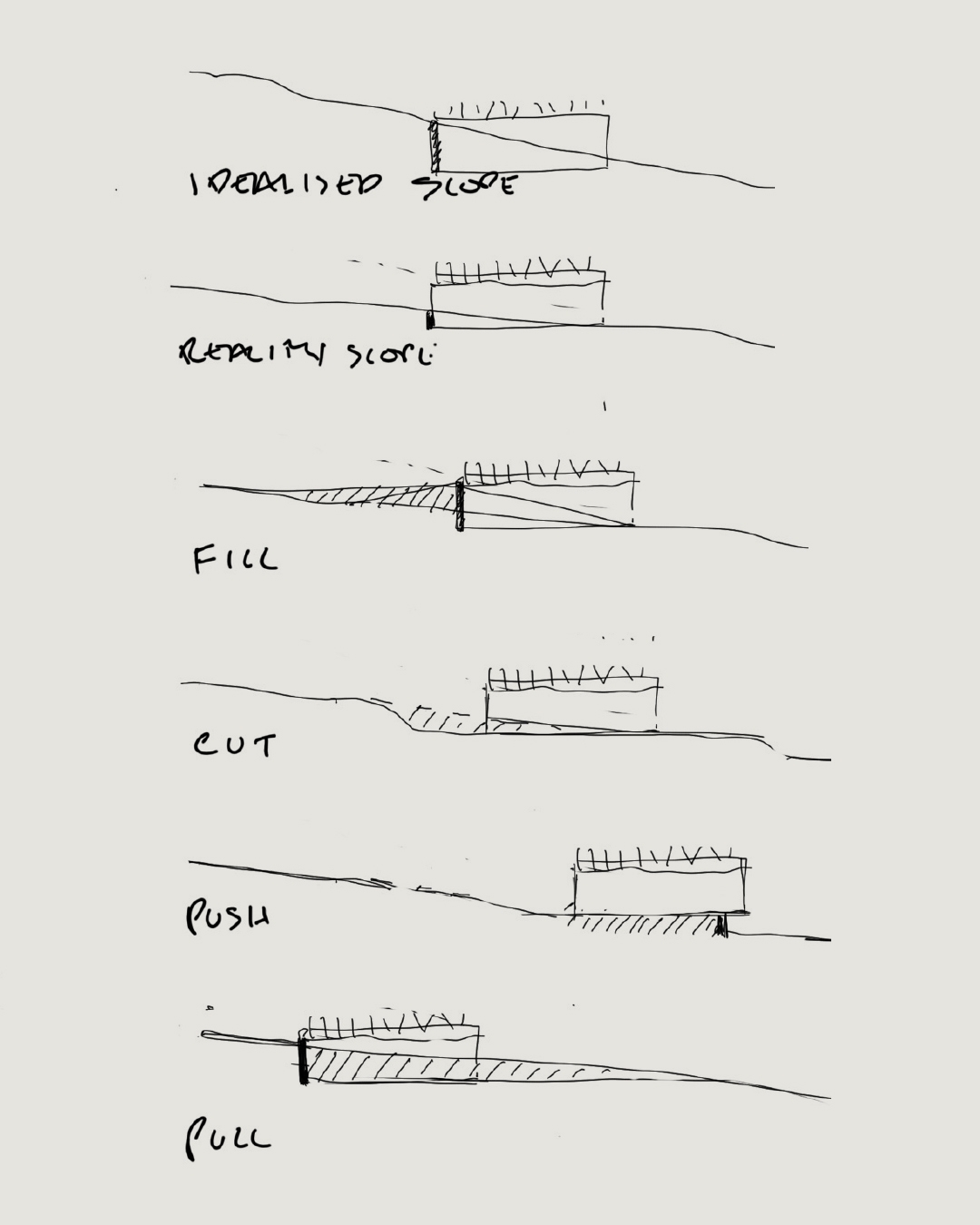

There was something deeply compelling about this discovery. Rather than introducing a building into an entirely untouched part of the site, we could continue a much older story. That understanding influenced everything that followed. Working closely with Landscape Architects, Studio 31, we explored multiple locations, forms and relationships between architecture and landscape. We assessed views, routes, vegetation, veteran trees and the wider character of the site before any final decisions were made. Numerous options were tested.
Early ideas explored a more linear arrangement and investigated whether the building should be embedded more directly into the slope. We built models, developed sketches and tested alternative responses. Some options proved too expensive. Others felt too dominant within the landscape. Gradually, a clearer solution began to emerge.

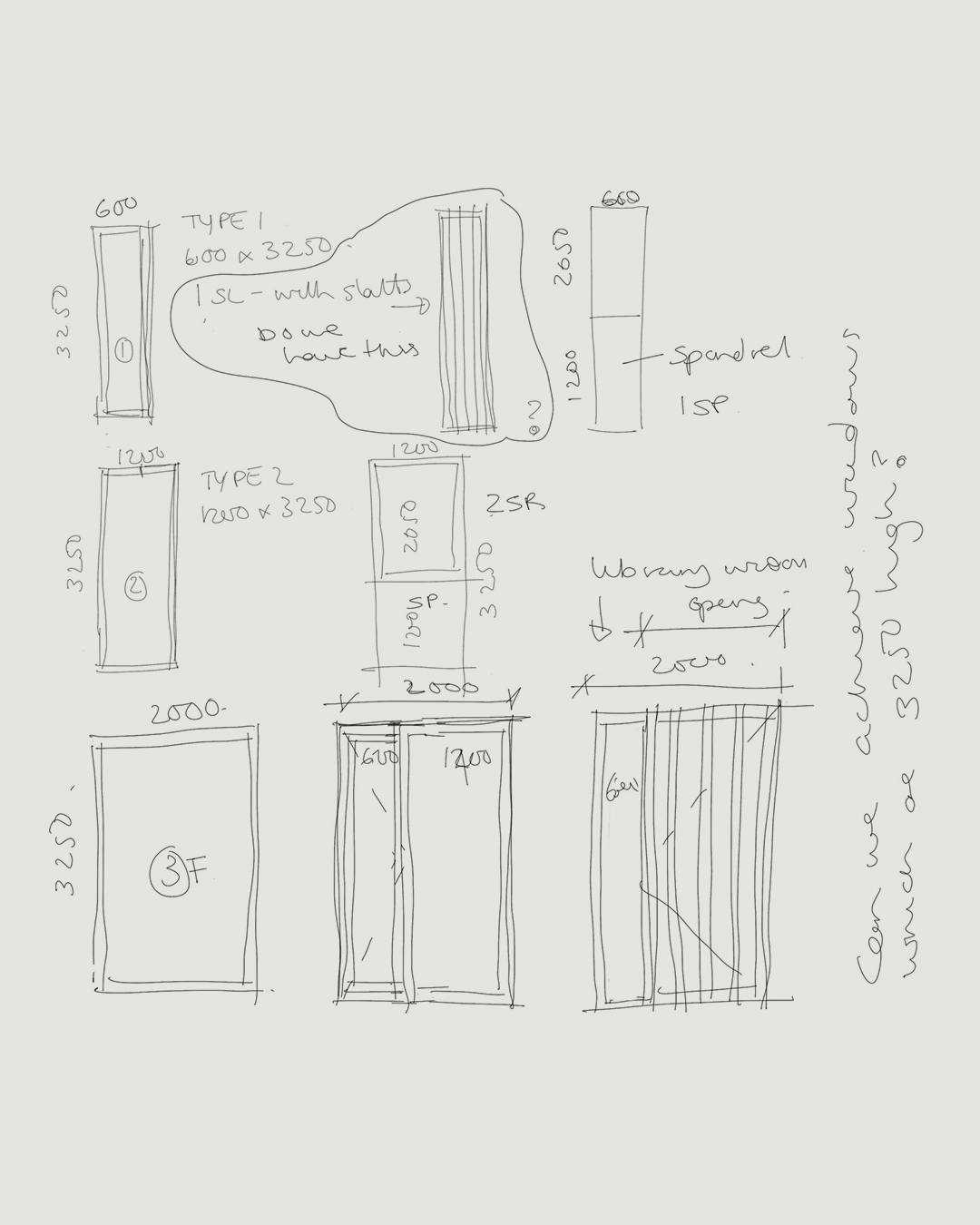

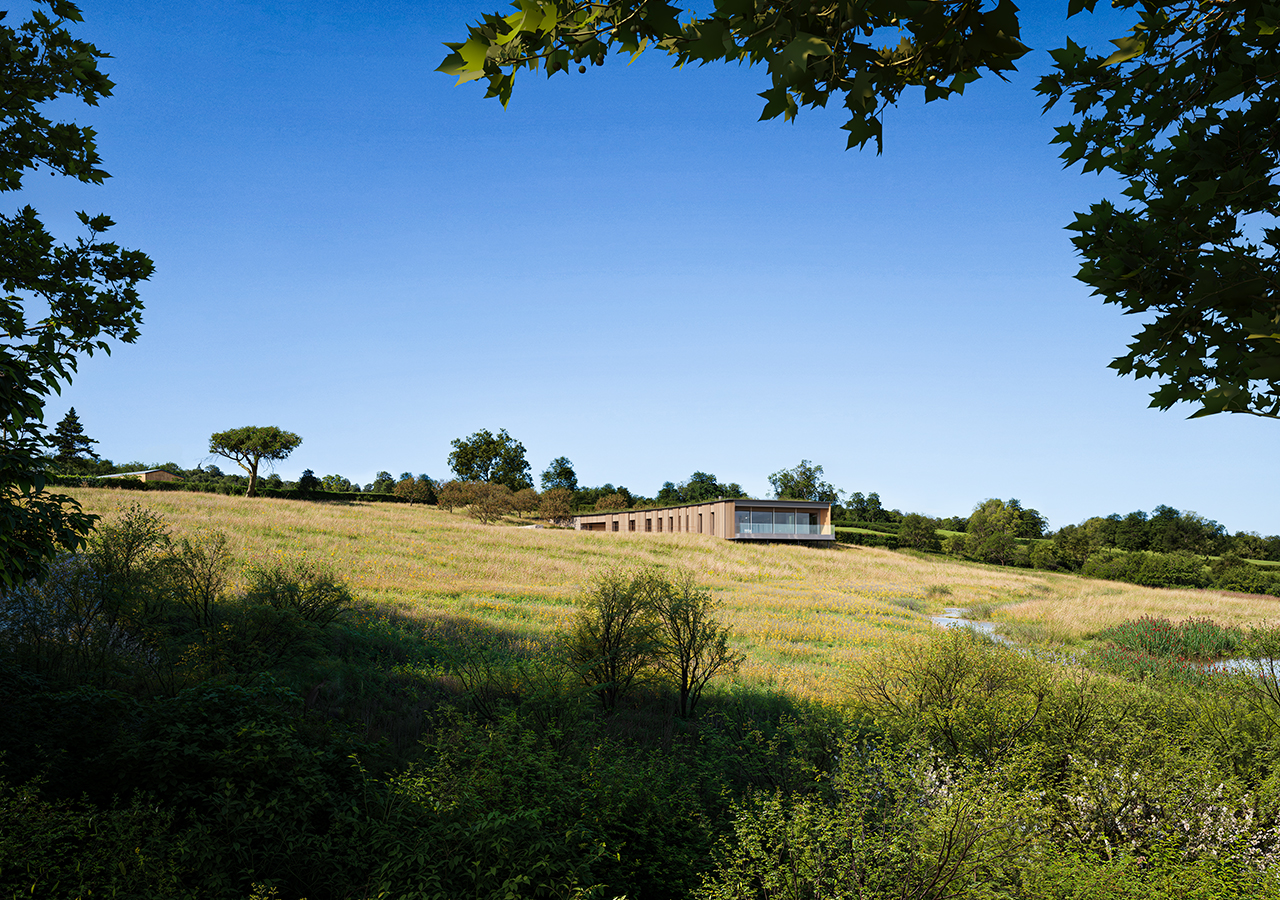
The final building sits laterally across the slope, curving gently towards the landscape and the views beyond. Large gable windows facing south west, frame Culver Down, while the landscape falls gently onto the roof, allowing the surrounding landscape to continue visually across the building. The intention is that the architecture recedes into the land rather than imposing itself upon it.
We wanted the building to feel present but not dominant. Visible, and exciting, but never intrusive. The material strategy followed a similar process.


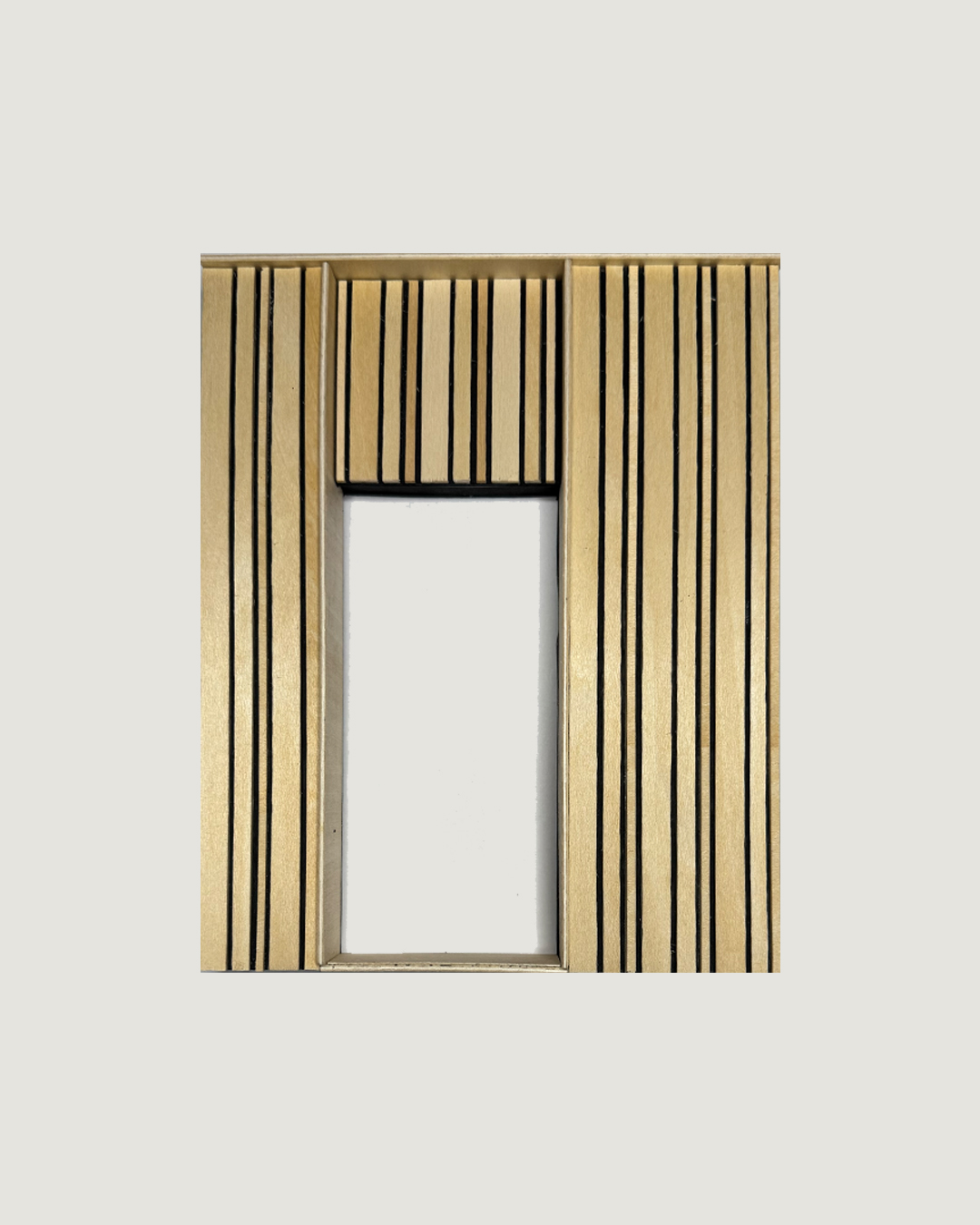
The project will be constructed almost entirely from timber. Locally sourced timber forms the primary architectural expression. Rough-sawn cladding, of varying widths was selected because of its honesty, simplicity and inherently low-carbon nature. We deliberately avoided tying the project to expensive proprietary systems, preferring materials that feel appropriate to both the landscape and the client’s ambitions.
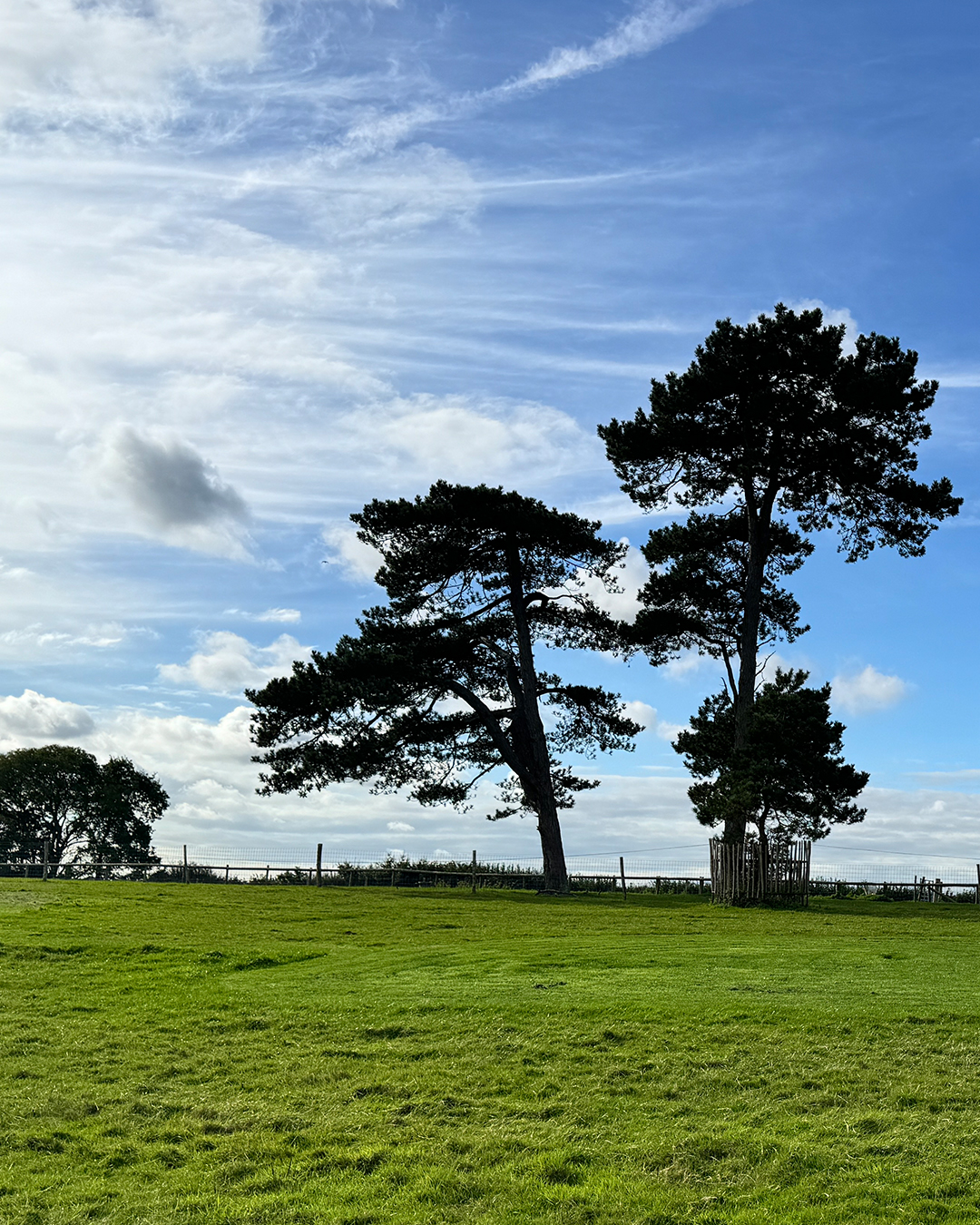
Veteran trees also played an important role. These existing features helped shape the final location of the building, ensuring root protection areas could be respected and allowing these remarkable trees to continue thriving long into the future. Even the retaining strategy emerged from landscape thinking.
Gabion walls filled with locally available waste stone provide gentle transitions between architecture and landform while reducing waste and embodied carbon. They allow the landscape to fall naturally towards the building and reinforce the feeling that the architecture belongs to its surroundings. Projects such as Fearne Hill demonstrate why thoughtful rural architecture requires patience.
It takes time to explore alternatives. It takes time to understand history. It takes time to collaborate. And it takes time to allow a design to evolve rather than forcing an immediate solution. In a profession that often celebrates speed, there can be real value in slowing down.
Because the strongest architectural ideas are rarely imposed on a landscape. More often, they are discovered within it.