Fearne Hill
Fearne Hill is a landscape-led country house shaped by stewardship, memory, and a profound connection to the land.
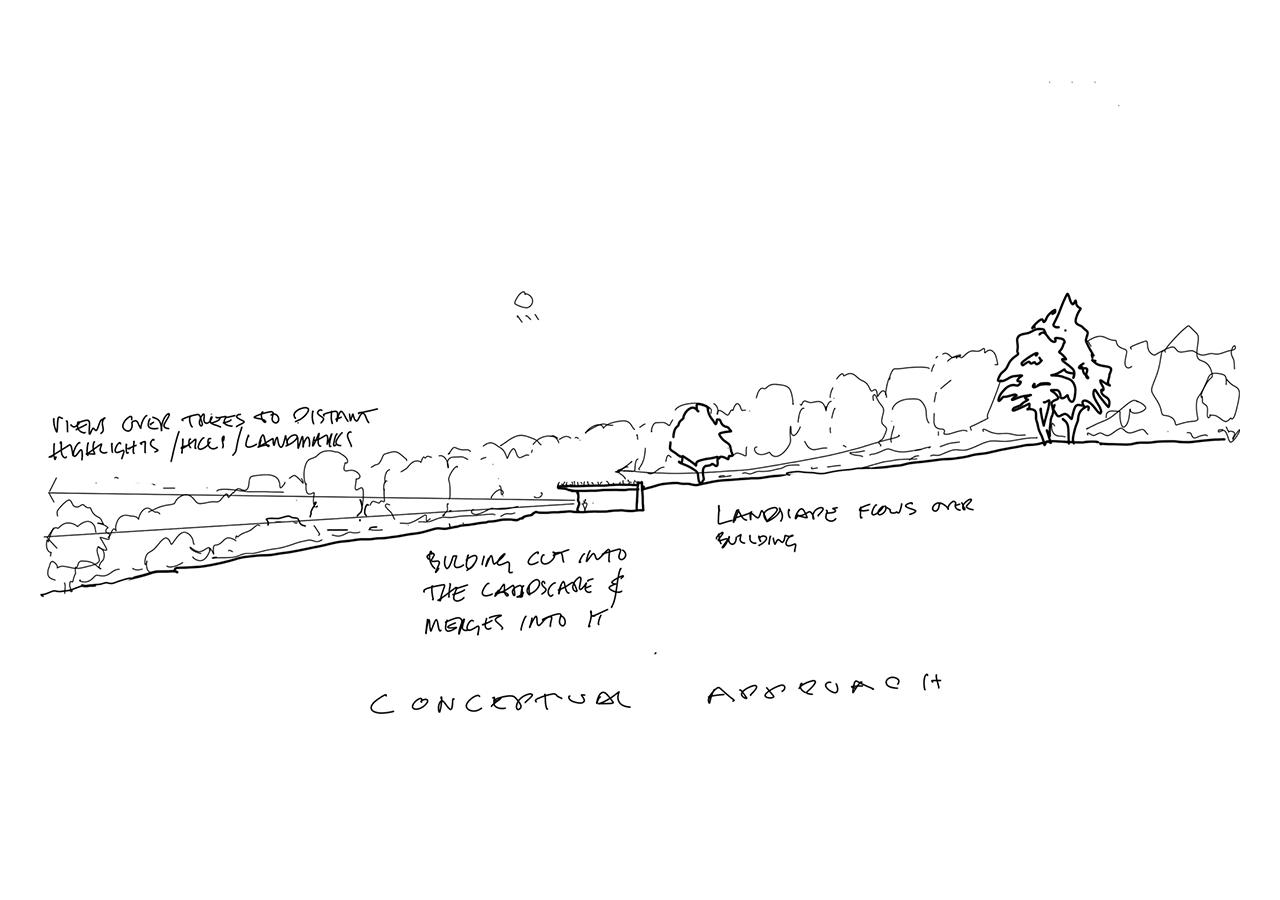
Set within an expansive agricultural landscape on the Isle of Wight, we began with a careful reading of historic maps examining lost field patterns and subtle shifts in topography. A plateau was revealed, once home to a dwelling that has long since disappeared. The idea of uncovering what lies beneath intrigued us and became the foundation of the conceptual approach.
The new house is embedded into the slope and revealed gradually on approach, with the landscape remaining the dominant experience. Stunning long views towards Culver Down are deliberately framed, while bedrooms and quieter spaces look out to veteran oaks and shafts of evening light filtering gently through the trees. The architecture is calm and restrained, softening into the land rather than competing with it.
Collaboratively developed under Paragraph 84e of the National Planning Policy framework alongside a environmentally and low-embodied carbon team including Webb Yates, Studio 31 and Rural Solutions this is an architecture that treads lightly.
Project Info
- Location: Isle of Wight
- Cost: £1.5 millon
- Collaborators: Webb Yates, Studio 31, Rural Solutions, MESH
- Image Credit: PAD studio
Environmental Data
-
Energy Efficiency
1 2 3 4 5 6 7
-
Insulation
1 2 3 4 5 6 7 8
-
Airtightness
1 2 3
-
Solar PV
1 2 3 4 5 6 7 8
-
Embodied Carbon
1 2 3 4 5 6 7
- Heating/Hot Water
-
Solar Thermal
Yes No
-
Rain Water Harvest
Yes No
- Ventilation
-
Energy Storage
Yes No


Constructed entirely without concrete above ground, the building sits lightly on screw piles and is timber throughout. Rough-sawn local timber cladding, laid in varied widths, echoes the surrounding woodland. Gabion retaining walls filled with local waste stone, anchor the home to the land and allow the land to fall gently onto the roof, avoiding carbon-intensive waterproofing and heavy engineering.
This is our fifth Paragraph 84e project, developed with an exceptional consultant team and a joyful collaboration with Studio 31 on the landscape. Fearne Hill is a quiet, low-carbon home that gives back to its setting, restoring ecological richness while offering a place to pause, reflect and belong.

Modest in scale yet precise in execution, the architecture relies on clarity rather than grandeur. A restrained palette of timber and stone allows the house to weather naturally into its surroundings, while carefully recessed openings control light, views and solar gain. Every design decision is purposeful — from the curved form following the contours of the land to the discreet arrival sequence that prioritises landscape over driveway. The architecture serves the site, not the other way around.
A Landscape in Recovery. Fearne Hill extends far beyond the house itself. The wider project includes a comprehensive landscape restoration strategy rooted in long term stewardship.
• Thousands of new trees and shrubs
• Reinstated historic hedgerows
• Species rich wildflower meadows
• New ponds and wetland habitats
• Strengthened wildlife corridors aligned with the Isle of Wight Local Nature Recovery Strategy
Low intensity grazing and chemical free land management support biodiversity while re establishing the character of a working rural landscape. Agricultural buildings and stables are carefully sited to reinforce historic settlement patterns and keep the focus on land management, not domestic sprawl.
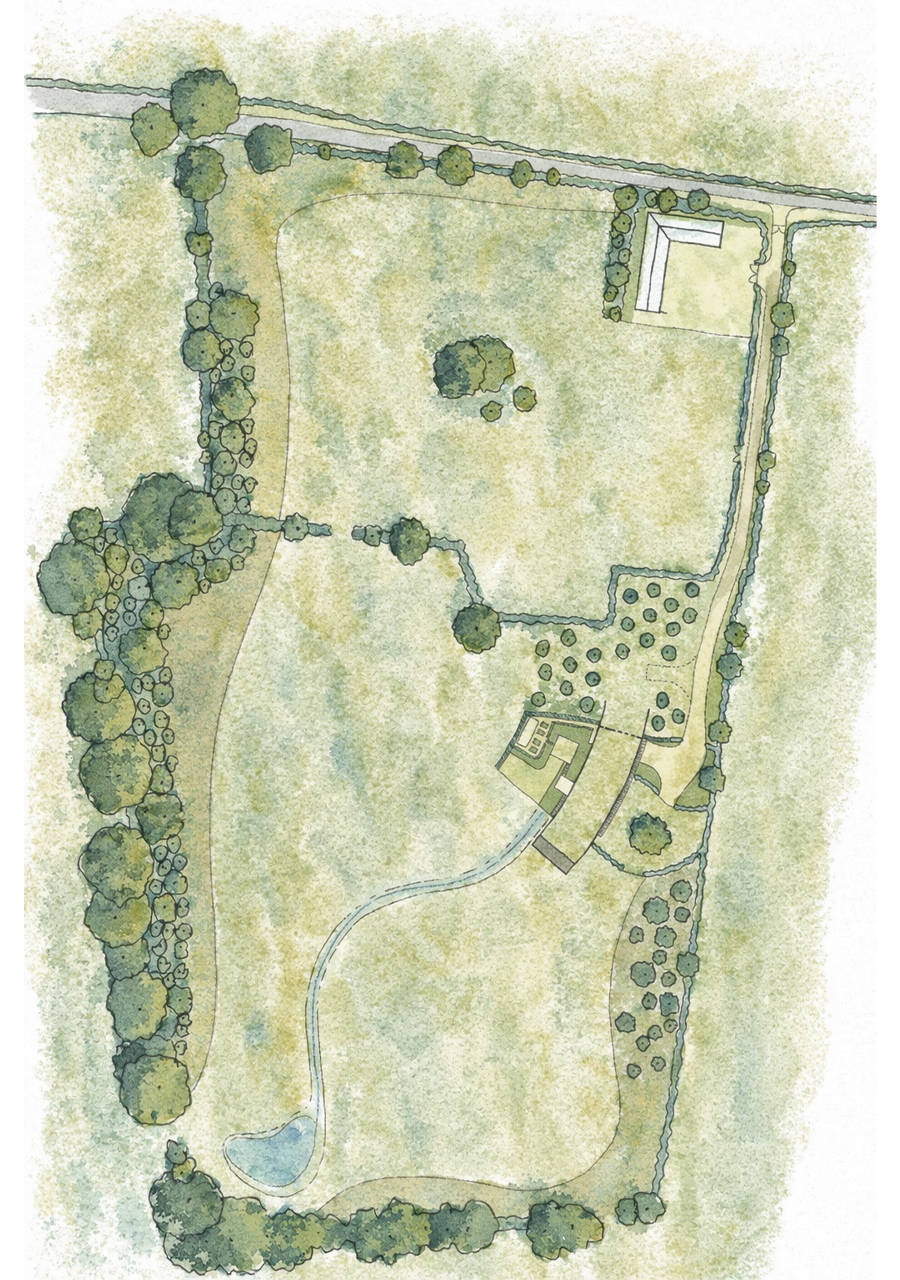
Heading to planning following a positive pre-application consultation Fearne Hill is more than a single dwelling. It is a holistic project where architecture, landscape and ecology work together to regenerate land, support wildlife and demonstrate a responsible future for rural development. The result is a quiet, refined piece of architecture embedded in a restored landscape — a home that gives back more than it takes.
We are looking forward to celebrating this family home further as it progresses through planning and onto site.